
|
Concidering the 7.62 posts recently |
Post Reply 
|
Page <123> |
| Author | |||
Strangely Brown 
Senior Member 

Joined: April 05 2022 Location: Wiltshire Status: Offline Points: 645 |
 Post Options Post Options
 Thanks(0) Thanks(0)
 Quote Reply Quote Reply
 Posted: January 06 2023 at 3:31pm Posted: January 06 2023 at 3:31pm |
||
Geoff, I feel the authorities (read ROF Enfield) must have known about ammunition quality concerns, whilst Major Reynolds was retired he still had connections with Enfield Lock and Radway Green through his articles in the shooting press. The question is, did they bother to do anything about it given it was deemed good enough for "government work" at that time? Borneo, Cyprus and Aden were fairly hot postings in the 1960's and Bisley might have been seen in some eyes as a nuisance...I'm thinking out loud as I type this! Another connection from Bisley to ROF Enfield was Herbert (Bert) Whitaker who worked there on various projects and won the Grand Aggregate at Bisley in 1967, right on the changeover period to 7.62mm. |
|||
|
Mick
|
|||
 |
|||
|
Strangely Brown
Senior Member
Joined: April 05 2022 Location: Wiltshire Status: Offline Points: 645 |
Post Options
Thanks(0)
Quote Reply
Posted: January 06 2023 at 3:46pm |
||
Quite possibly Geoff, even in recent years there have been communication problems between contractors and the MOD, let alone shooting organisations. The last big one I recall was in 1986 when a a company called Pylon industries attempted to fabricate the then new L96 sniper rifle without telling the MOD they had lost their certification to do the job.
|
|||
|
Mick
|
|||
|
|||
|
britrifles
Senior Member

Joined: February 03 2018 Location: Georgia, USA Status: Offline Points: 8404 |
Post Options
Thanks(0)
Quote Reply
Posted: January 06 2023 at 4:38pm |
||
Excellent point Mick, and as I said, the L1 was certainly no target rifle, and the government arsenals would not be all that interested in hearing complaints from the NRA on “ accuracy problems” with the No. 4 conversions. I have to believe the No, 4 conversions were at best an afterthought, the train was already in motion for a self loading rifle well before there were any notions of changing calibers for the No. 4. And it does seem that Sterling were first to see the market for converting No. 4 rifles and not RSAF. This is not to say that there was no specification for ammunition accuracy, for surely there must have been, but I suspect it’s safe to say that the 7.62 ammunition made at the time did not exceed the specified accuracy by a wide margin, and said specification was not likely something a target rifle shooter would be too excited about. Canada had manufactured various lots of .303 ammunition that became known for its exceptional accuracy and successful attempts were made to secure some of it for DCRA matches. I have ammunition from two lots used in numerous DCRA annual matches: 1945 Cordite and 1951 NC powder loads that to this day will still shoot to 1.5 MOA. Although, I don’t like shooting the Cordite loads much for known reasons. |
|||
|
|||
|
Goosic
Senior Member

Joined: September 12 2017 Location: Phoenix Arizona Status: Offline Points: 8842 |
Post Options
Thanks(0)
Quote Reply
Posted: January 06 2023 at 4:46pm |
||
Any information on how good this stuff is. My recent purchase that showed up today. Dated 1943...
  |
|||
|
|||
|
britrifles
Senior Member
Joined: February 03 2018 Location: Georgia, USA Status: Offline Points: 8404 |
Post Options
Thanks(0)
Quote Reply
Posted: January 06 2023 at 5:31pm |
||
|
I don’t know much about the Winchester .303, other than it is a ball powder load, could be corrosive primers, made during WWII. I’m curious what the bullet composition is, looks like it might be all lead core based on the length protruding from the case mouth. What is the overall length?
You could shoot some, just make sure you clean the bore and chamber with water afterwards (same day), dry out, then use your your normal cleaning solvent. But, that looks to me to be a very collectible box of WWII service ammo. |
|||
|
|||
|
Strangely Brown
Senior Member
Joined: April 05 2022 Location: Wiltshire Status: Offline Points: 645 |
Post Options
Thanks(0)
Quote Reply
Posted: January 07 2023 at 4:57am |
||
|
An observation from over the last 50 years: (actually more of a rant!) Radway Green used to sell their ammunition (once they had ironed out the bumps) and Green Spot was very popular with target shooters having been given the service tag of "sniper" attached to it. The Royal Ordinance Factory at Enfield Lock manufactured the commercial Envoy target rifle which was almost identical to the conversions for the ARA (Army Rifle Association) and the issued L39 for tri service competitions. Where am I going with this? Well it would be unheard of today for a UK government department to sell ammunition to civilians, the army target shooting club will give serving members L42A3 7.62mm ammunition but heaven help you if you're retired you have to buy the club's home loads which are probably slightly better but that's a debate in the bar for another evening! The thought today that you could buy a firearm from a government contractor (Accuracy International aside) is almost laughable, although I do know of one person who purchased a cadet version of the SA80 (single shot with a large cocking handle at the side) from his work place which just happened to be BAE Systems who made them at the time. His rifle was seized by MOD police along with two from one of my clubs, in total they impounded 11 and a lengthy court case ensued. I hope to post the full story once it's published by our chairman who fought the case...we did get them back eventually. A lot has changed in 50 years! 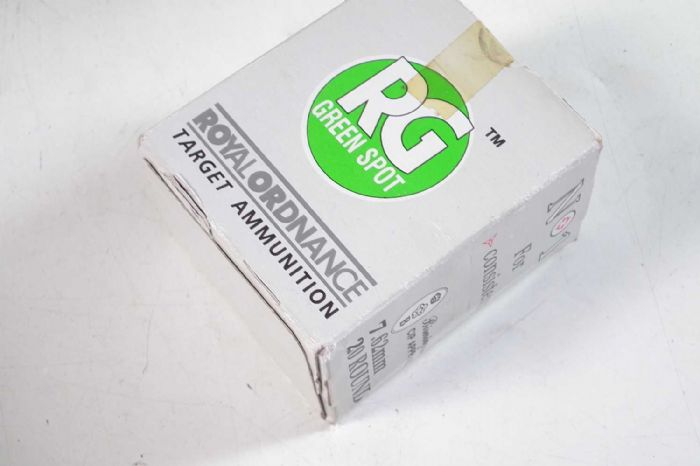
|
|||
|
Mick
|
|||
|
|||
|
Goosic
Senior Member
Joined: September 12 2017 Location: Phoenix Arizona Status: Offline Points: 8842 |
Post Options
Thanks(0)
Quote Reply
Posted: January 07 2023 at 5:42am |
||
|
Laidler?
|
|||
|
|||
|
Strangely Brown
Senior Member
Joined: April 05 2022 Location: Wiltshire Status: Offline Points: 645 |
Post Options
Thanks(0)
Quote Reply
Posted: January 07 2023 at 5:47am |
||
Yes he was involved but it became a very messy business for all of the others, in fact I'm not sure how many people got their rifles back as some couldn't afford the legal costs and just walked away.
|
|||
|
Mick
|
|||
|
|||
|
Goosic
Senior Member
Joined: September 12 2017 Location: Phoenix Arizona Status: Offline Points: 8842 |
Post Options
Thanks(0)
Quote Reply
Posted: January 07 2023 at 6:58am |
||
I can only use what I have as a reference in regards to, "Poor Quality of .303 service ammunition." The following photo shows a total of 168 rounds of Winchester branded .303 inch Mk VIIz 174grn ammunition with date ranges 1941, 1942, and 1943. My initial intention was to pull the bullets, dump the old powder and replace it with fresh powder, reseat the bullets and go. That was until I decided to weigh each bullet. Out of 168 bullets, I found 40 bullets that weighed exactly 173.6grns. "Close enough for government work in full swing here." I found 24 that weighed between 168.9grns and 171.2grns. I found 54 that weighed between 174.9grns and 175.6grns. The remaining 50 bullets weighed between 173.1grns and 174 .4grns. The two well worn boxes on the right have the 173.6grn bullets. The rest of those bullets are sitting in a coffee can. I removed every primer and reprepped the cases. Reprimed with GM215M primers, used 40.0grns of VVN540 and seated every case, "minus the 40 previously mentioned" with a Hornady .311 174grn FMJ-BT to an OAL of 3.035" What I found in weighing all those bullets individually was appalling, and it can only be assumed that the other manufacturers of the Mk VIIz ammunition were doing the same with what they had, "as long as they were close enough in weight" get it shipped out asap. The irony that the BMOD turned their noses up at the fledgling 7.62 and huffed about crappy accuracy issues while it clearly evident just with my small lott that, given the extreme varying range in bullet weights would have certainly produced crappy accuracy issue as well decades earlier is humorous to say the least. The ONLY reason the L8 project was sh*tcanned was that the BMOD did not want to be left behind in the production of a SLR...
 |
|||
|
|||
|
britrifles
Senior Member
Joined: February 03 2018 Location: Georgia, USA Status: Offline Points: 8404 |
Post Options
Thanks(1)
Quote Reply
Posted: January 09 2023 at 9:17am |
||
|
This thread brought up the subject of “compensation”, which is the word used to describe how a rifle “compensates” for varying muzzle velocities to reduce changes in vertical POI on the target at some particular range.
I dug thru my score book and found that my No. 4 Savage which has the standard muzzle bearing does exhibit this behavior when fired prone. Fast bullets leave the muzzle at a lower angle of departure of the bore axis than slow bullets, presumably due to action and barrel deflection while the bullet is still in the barrel. I saw this in comparing two different loads, my regular match load of 40 gr Varget with 174 gr SMK and a new test load with 44 gr Varget and a 123 gr Lapua FMJ. The second load is obviously at a much higher muzzle velocity, yet it impacted the 200 yard target 8 inches lower than the first load. I ran a similar test with the 123 grain Lapua bullets with my Fulton No. 4 which has a barrel bearing 5 inches forward of the breech and bullet impact at 200 yards was almost the same between the two loads, only 1 MOA lower for the faster bullet. I’d guess the compensating range might be 300 or 400 yds. The second test is rather interesting as it would indicate both bullet weight variances and muzzle velocity variances has little affect on accuracy with centre bedded rifles, at this range anyway, which may be why Fultons chose this location for the barrel bearing. |
|||
|
|||
|
britrifles
Senior Member
Joined: February 03 2018 Location: Georgia, USA Status: Offline Points: 8404 |
Post Options
Thanks(0)
Quote Reply
Posted: January 09 2023 at 10:43am |
||
|
One more interesting data point, in looking at my rear sight settings for 100 thru 1000 yards on my DCRA No. 4 7.62, I see that the rifle does indeed “compensate” right at 800 yards with identical elevation settings and also nearly identical elevation settings at 600 yards with these three different loads:
Load 1 - 155 gr Palma MK, MV = 2720 fps Load 2 - 175 gr TMK, MV = 2560 fps Load 3 - 168 gr TMK, MV = 2620 fps This rifle has a barrel bearing at the lower band (sling swivel band) with about 12 lbs pressure, fitted by DCRA armourer Dave Reynolds back in the mid 1960’s. He knew what he was doing… At 100 yds, Load 1, the fastest bullet, required the highest rear sight setting, but only 2 MOA above Load 2, the slowest bullet. My conclusion is not to worry too much about bullet weight variations that are less than 5 grains. I don’t think I’ve ever sorted bullets by weight, except for cast bullets, to cull those that may have voids or casting defects. The above loads had bullet weights that varied by 20 grains and muzzle velocities that varies by 160 fps, yet the point of impact change was quite small, with no change at all at 800 yds and a 2 inch change at 100 yards. Again, I suspect that the forend barrel bedding method plays a very significant role here and these competition rifles were bedded in ways to reduce the influence from manufacturing variations in ammunition. Well, I learned something today! |
|||
|
|||
|
Goosic
Senior Member
Joined: September 12 2017 Location: Phoenix Arizona Status: Offline Points: 8842 |
Post Options
Thanks(0)
Quote Reply
Posted: January 09 2023 at 11:43am |
||
You mentioned barrel bedding. Specifically at the lower band area. If you look at the following photos, you will see where the barrel on my 1944 Maltby just makes contact at the reinforce, the lower band area, and the muzzle. It also appears that the barrel bedding was inspected by Inspectors 5 and 12 according to the penciled in 5 & 12 in the barrel channel. I have not shot this rifle yet but, it definitely looks as if it was given a little bit of extra accuracy attention before it left the factory floor. When I do finally get a chance to fire the rifle, the rounds fired should have a MV of 2388 and will be using FMJ-BT projectiles...
    |
|||
|
|||
|
britrifles
Senior Member
Joined: February 03 2018 Location: Georgia, USA Status: Offline Points: 8404 |
Post Options
Thanks(0)
Quote Reply
Posted: January 09 2023 at 12:01pm |
||
|
Goosic, the barrel bearings done by Fultons and DCRA (and others) are quite different. On my DCRA, the bearing at the lower band location pushes up on the barrel by about 12 lbs, with at least 0.05 inches of barrel clearance with the forend forward and aft of the bearing. This one was done by Dave Reynolds.
Looking forward to see how your new No. 4 shoots.
 |
|||
|
|||
|
britrifles
Senior Member
Joined: February 03 2018 Location: Georgia, USA Status: Offline Points: 8404 |
Post Options
Thanks(0)
Quote Reply
Posted: January 09 2023 at 12:09pm |
||
|
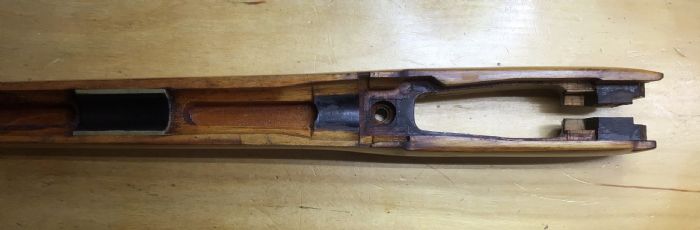
Here’s my Fulton’s No. 4 forend, bearing is much closer to the chamber reinforce and at about 22 lbs barrel pressure.
 |
|||
|
|||
|
shiloh
Senior Member

Joined: January 08 2019 Location: Ontario, Canada Status: Offline Points: 3049 |
Post Options
Thanks(0)
Quote Reply
Posted: January 09 2023 at 12:29pm |
||
|
I would think that with every unit at the front screaming for ammunition it would be a moot point on sending match ammo. Snipers got good stuff to start but eventually in the field you`d use what you could get. Most battles consisted of suppression firing to keep the line moving, once at closer quarters it didn`t matter as long as you rifle went bang. Battle is brutal and if your boys armed with lee enfields could keep up fire with 10rnd mags vs 5 rnd mausers, who do you thing won the day.
|
|||
|
|||
|
britrifles
Senior Member
Joined: February 03 2018 Location: Georgia, USA Status: Offline Points: 8404 |
Post Options
Thanks(0)
Quote Reply
Posted: January 09 2023 at 1:18pm |
||
|
Shiloh, none of this has any application to “as issued” rifles in military service. This all pertains to competitive Service Rifle shooting, that was quite popular at one time. There would be over a thousand competitors at the annual matches held at Connaught and Bisley back in the days of SR(b) shooting with the No. 1 and No. 4, which those two rifles I have were intended to be used in. The DCRA 7.62 rifles were built just for that purpose.
The No. 4 is long gone from large bore competition, except for vintage service rifle type matches, for which these specially bedded rifles are not eligible for since they are not “as issued”. But, yes, to your point, that’s why the M1 was such an effective service rifle in WWII and why other countries followed, the UK with the L1 SLR rifle, Canada with the FN, etc. Target accuracy was of no concern, except for snipers, which have gone in and out of “fashion” over the years. Canada did however take steps to produce more accurate Lots of 7.62 ball to support the DCRA matches in the 1960’s. Radway Green in the UK eventually did as well. Here in the US, there were more active programs to produce actual “Match” ammunition for the National Matches. All this stopped when the government stopped providing ammunition for the matches and made it the competitors responsibility to provide. |
|||
|
|||
|
Post Reply
|
Page <123> |
| Tweet |
| Forum Jump | Forum Permissions You cannot post new topics in this forum You cannot reply to topics in this forum You cannot delete your posts in this forum You cannot edit your posts in this forum You cannot create polls in this forum You cannot vote in polls in this forum |


 Topic Options
 britrifles wrote: