
|
Cast bullets for the Enfield |
Post Reply 
|
| Author | ||
Lakemaster 
Newbie 

Joined: November 16 2025 Location: Lake Havasu Cit Status: Offline Points: 15 |
 Post Options Post Options
 Thanks(0) Thanks(0)
 Quote Reply Quote Reply
 Topic: Cast bullets for the Enfield Topic: Cast bullets for the EnfieldPosted: January 23 2026 at 6:31pm |
|
|
Are there any cast bullet experts out there that have a favorite bullet? I have an eroded throat on mine. I bought a Flat nose hunting bullet mold from Noe . It's got a .227 metplate. It's the 8mm version of what I have for my 30 cal rifles. ( I know 8mm isn't for the 303 )
Anyone have a bullet style that works really well for the Enfield?
|
||
 |
||
|
Rick
Groupie 
Joined: April 24 2025 Location: NW MT/SE BC Status: Offline Points: 83 |
Post Options
Thanks(0)
Quote Reply
Posted: February 07 2026 at 11:14pm |
|
The favorite cast bullet is going to be the one that fits nice and snug into the ball seat and lede of your rifle. Which is also true of every other rifle out there of whatever caliber and make. You are far less likely to get the best results with the bore riding designs, particularly if it is worn in the ball seat/lede. A more tapered design up until the full diameter at the bands is more likely to reward you with good results. If you really want to seriously cast, versus just turning out bullets for killing tin cans at close range at a nearby gravel pit, slug the ball seat and lede first so you can measure. It's nice to know what bore and groove diameters are, but what really counts is whether the bullet sits nice and snug into the ball seat/lede when the loaded round is chambered. You want the bore obdurated as quickly as possible once the charge fires and the bullet starts moving out of the neck. A nice rifle deserves nice moulds that will also make both the casting and the shooting far more enjoyable. I have had nothing but great luck getting Tom at Accurate Moulds to take the measurements I give him and turn out moulds that drop bullets to those exact measurements. If you are going to powder coat as most are doing these days due to the simplicity and effectiveness, decrease your dimensions by about .002" to compensate for the additional size in diameter of the bullet. For hunting, bullets with flat meplats are pretty heavily favored by those who hunt with cast bullets. 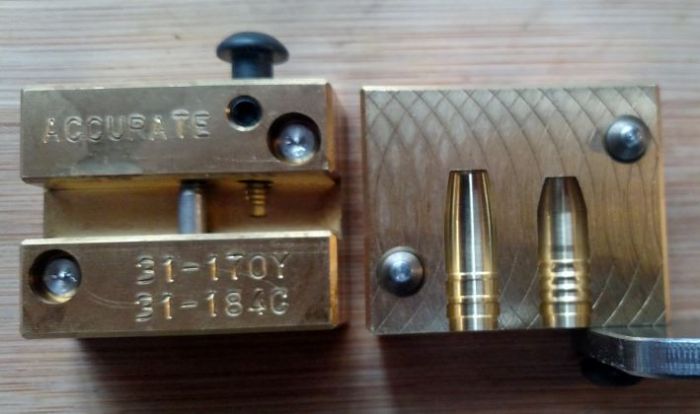 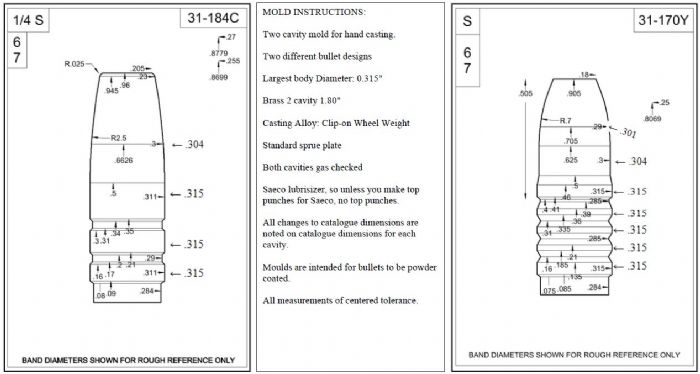 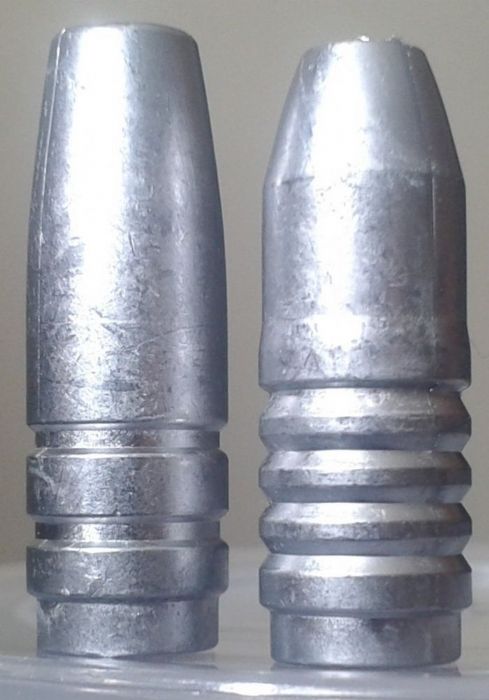 |
||
|
||
|
A square 10
Special Member 

Donating Member Joined: December 12 2006 Location: MN , USA Status: Online Points: 16998 |
Post Options
Thanks(0)
Quote Reply
Posted: February 07 2026 at 11:24pm |
|
|
if i were still shooting these id be casting , ive learned a lot of these bullets in my SASS years and grown to respect them a lot
|
||
|
||
|
Lakemaster
Newbie
Joined: November 16 2025 Location: Lake Havasu Cit Status: Offline Points: 15 |
Post Options
Thanks(0)
Quote Reply
Posted: February 08 2026 at 4:04am |
|
|
Shortly after I posted this, I discovered the rifling in my rifle doesn't really grab the cast bullets regardless of the bullet style. It's awfully tired and neglected
At hunting velocity the bullet swages down and hits the target sideways. I have 50 paper patched bullets ready to try This is certainly the most interesting gun I've ever tried to cast for in my years
|
||
|
||
|
bubba ho tep
Senior Member 
Joined: June 19 2017 Location: KY abode Status: Offline Points: 290 |
Post Options
Thanks(0)
Quote Reply
Posted: February 10 2026 at 9:51am |
|
|
There is a huge thread at castboolits.com on 303 cast bullet loading.
|
||
|
||
|
britrifles
Senior Member

Joined: February 03 2018 Location: Georgia, USA Status: Offline Points: 8404 |
Post Options
Thanks(1)
Quote Reply
Posted: February 10 2026 at 5:40pm |
|
|
What is the diameter of the bullet? It may be too large and swaging is deforming the base. Measure the throat and use a bullet that is 0.001 to 0.002 over throat diameter.
|
||
|
||
|
Lakemaster
Newbie
Joined: November 16 2025 Location: Lake Havasu Cit Status: Offline Points: 15 |
Post Options
Thanks(0)
Quote Reply
Posted: February 10 2026 at 8:46pm |
|
|
.320 throat
|
||
|
||
|
Rick
Groupie
Joined: April 24 2025 Location: NW MT/SE BC Status: Offline Points: 83 |
Post Options
Thanks(0)
Quote Reply
Posted: February 11 2026 at 11:36am |
|
With cast bullets, whatever type of cast bullet design you're working with, get your bullet to a snug fit inside the ball seat/lede, and that's more than half the battle of load development. I believe that is true whether you're obtaining that fit through paper patching (which I've never done for the .303) or by matching through casting techniques. Many "beagle" their moulds to get bullets that drop a few thou larger in diameter (no experience doing that), and the easiest way to increase size solves two issues at once: powder coating rather than traditional grease lubes.
|
||
|
||
|
Rick
Groupie
Joined: April 24 2025 Location: NW MT/SE BC Status: Offline Points: 83 |
Post Options
Thanks(0)
Quote Reply
Posted: February 11 2026 at 11:51am |
|
I think we're on the same page, but how are you going to actually chamber a round when the bullet is attempting to seat in a throat that it is 0.001 larger than? Semantics and word choice on what we're speaking of in the portion of the rifle barrel in front of where the case neck ends, Geoff? My 1895 in .30 U.S. has a ball seat so large that if I cast and size a bullet big enough for a snug fit, the external neck dimension of the loaded round is so big the cartridge will not fully chamber - interference between the case neck and that final portion of the chamber. A bullet exceeding the dimension of where it sits when seated would probably get pushed backwards into the case until the interference between their dimensions no longer existed. I suppose if I wanted to go down the rabbit hole, Accurate Moulds would make a heeled bullet mould if I wanted to go down that road. What works best from what I've tried is a bluntly tapered design which brings the full diameter of the cast bullet as close as possible to the front of the bullet. Bore riding designs like the ubiquitous 314299 which is successful in many rifles was about the worst - that bullet probably went down the bore with the front half of the bullet banging back and forth across the sides of the bore. (more likely, when the base of the bullet did obdurate the bore, it did with the nose of the bullet cocked to one side for the ride down the bore and then the flight to the target).
|
||
|
||
|
britrifles
Senior Member
Joined: February 03 2018 Location: Georgia, USA Status: Offline Points: 8404 |
Post Options
Thanks(0)
Quote Reply
Posted: February 11 2026 at 6:03pm |
|
Remember that the throat is tapered. And, the bullet nose also is profiled to a large radius, so it is essentially tapered. The base of the bullet may be .316 to .318 but it a stuffed into the case neck and nowhere near the throat. The diameter of the bullet forward of the driving bands will be smaller, perhaps .303 to .304 and not contact the lands in the throat. But, I agree with your point that you don’t want a jamb condition that would push the bullet further into the case. And with such a large bullet being used here, that might be part of the problem. Some years ago, I discovered that cast bullets can easily be swaged down during the seating process as it enters the case neck. |
||
|
||
|
britrifles
Senior Member
Joined: February 03 2018 Location: Georgia, USA Status: Offline Points: 8404 |
Post Options
Thanks(0)
Quote Reply
Posted: February 11 2026 at 6:11pm |
|
When we speak of “throat diameter”, I’m referring to the diameter of bore just forward of the case neck. There is a taper here where the lands are reamed away entirely and a “free bore” exists. This should be .314 to .316, but at the maximum tolerances in bore and groove depths, it might exceed this dimension. |
||
|
||
|
Rick
Groupie
Joined: April 24 2025 Location: NW MT/SE BC Status: Offline Points: 83 |
Post Options
Thanks(0)
Quote Reply
Posted: February 12 2026 at 8:26am |
|
|
I can probably find the Brits' dimensional drawing (or the CIP) for
the chamber. But for many rifles those dimensions are about as
theoretical as the dimensions for bore and groove. You're
very unlikely to be swaging lead bullets while chambering. More
likely, you're pressing the bullet into the leading portion of the
lands. Think about the effort it takes to hammer a short lead slug
through the bore to get land and groove measurements. I
tried seating the bullet into the lands while attempting to develop
loads for CBA benchrest. Sometimes it just pushed the bullet further
down the neck. Using a hard crimp stopped that but (in my case) groups
got worse. Because now it's a combination of what amount of crimp works
best and how close to or into the lands works best. You end up working
with at least two variables at one time. I saw
some guys this worked for who were far superior as load developers and
competitors. Including some for whom if they had to empty their
chamber, they knew the bullet would remain stuck in the lands while the
case and the powder inside it was extracted. That setup worked for them
well enough that they accepted that and kept a rod handy to tap the
bullet out if that happened. In my opinion, as a
general rule, cast or slug the ball seat and lede and measure. Then
work at finding a mould where the bullets fit as closely as possible
when the round is chambered. I haven't done extensive load development,
but the bore riding designs like the Loverin styles are far more
difficult to get good grouping out of than the more abruptly tapered
designs 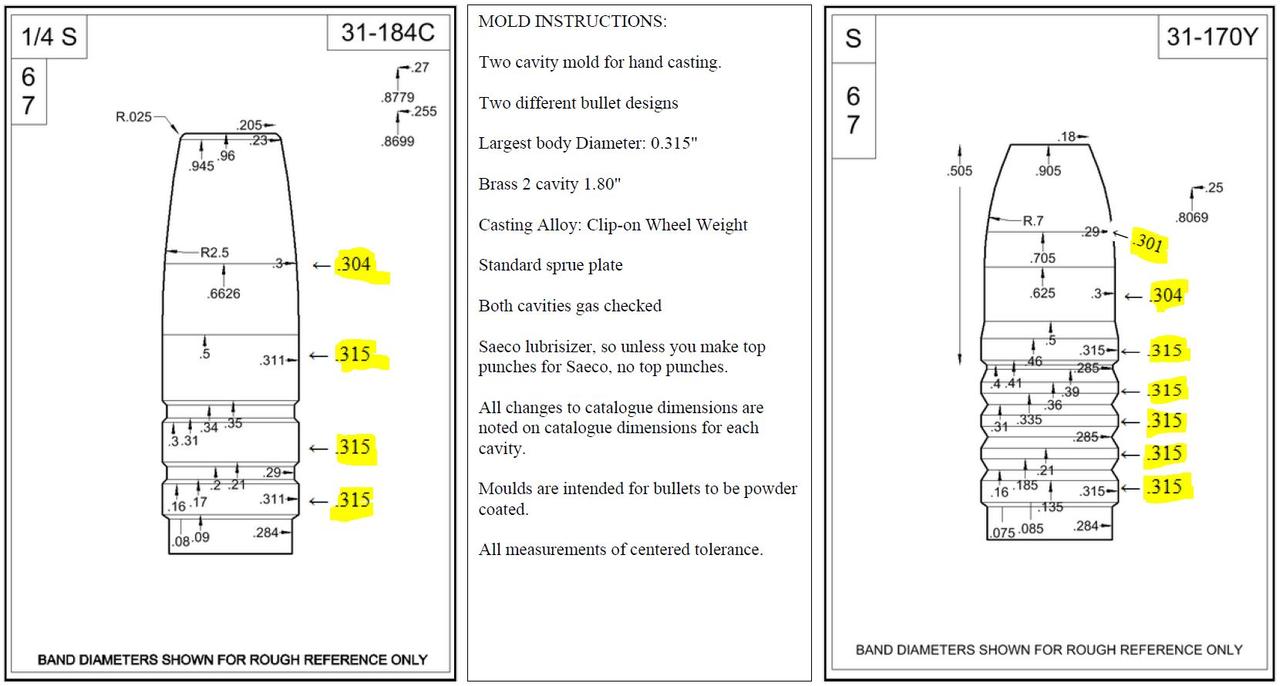 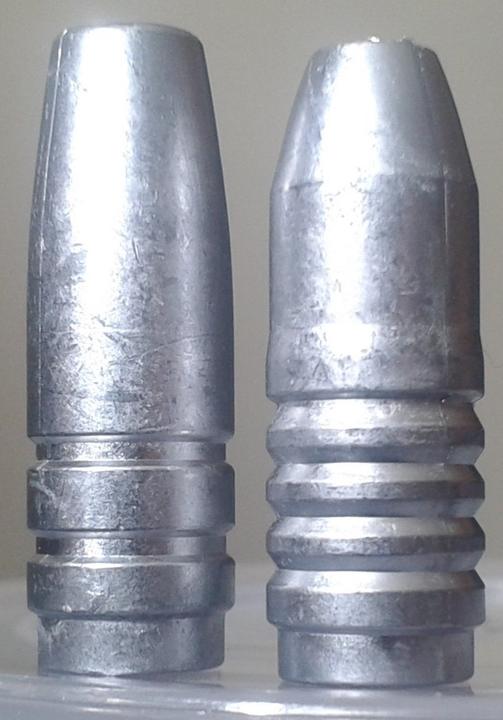 My
thoughts on this (echoing Ken Mollohan who taught me bullet casting for
rifles) are that the closest the bullet is to obdurating and sealing
the bore prior to the round being fired has numerous advantages. First,
there is minimal bullet travel before the bullet meeting the
constriction of the lands and grooves provides resistance and helps with
the initialization of obdurating the bore as soon as possible. Second,
the tighter the fit prior to the moment the cartridge is fired, the
least likely opportunity for propellant gases to escape around the
bottom and sides of the bore, resulting in gas cutting of the bullet and
small amounts of lead blown past and ahead of the bullet, leading to
fouling the bore and leading. |
||
|
||
|
BobaNugg
Newbie

Joined: March 24 2024 Location: Alberta CDA Status: Offline Points: 8 |
Post Options
Thanks(0)
Quote Reply
Posted: March 20 2026 at 7:52pm |
|
|
I’ve had good results on paper with a cast 314- 210gr RN w/gc. But that’s where it ends unfortunately. I did pick up a Lee Precision 312 - 185gr RN mould but haven’t picked a dedicated rifle to match it up with.
|
||
|
||
|
Post Reply
|
|
| Tweet |
| Forum Jump | Forum Permissions You cannot post new topics in this forum You cannot reply to topics in this forum You cannot delete your posts in this forum You cannot edit your posts in this forum You cannot create polls in this forum You cannot vote in polls in this forum |


 Topic Options
 Lakemaster wrote: